In this deeply meaningful conversation, host Rose Madrid Swetman speaks with Romanita Hairston, CEO of the M. J. Murdock Charitable Trust. Drawing from her vantage point leading a major philanthropic institution and her lifelong experience in the Pacific Northwest, Romanita helps us see grief not only as an emotional experience but as a necessary communal practice that can strengthen relationships, build bridges, and open new possibilities for flourishing.
Romanita reflects on the disruptive events of recent years including the “quadruple pandemic” of public health crisis, economic instability, racial reckoning, and political polarization, and how these collective pressures have reshaped the nonprofit sector. She names the weariness, compassion fatigue, and leadership transitions impacting organizations today, while offering a framework for attending to the human experience beneath strategic plans, funding models, and systems change.
With warmth, clarity, and deep wisdom, Romanita offers pastors, nonprofit leaders, and anyone navigating change a compelling vision for how grief and gratitude deepen our capacity to lead with courage, humility, and love.
About our guest:
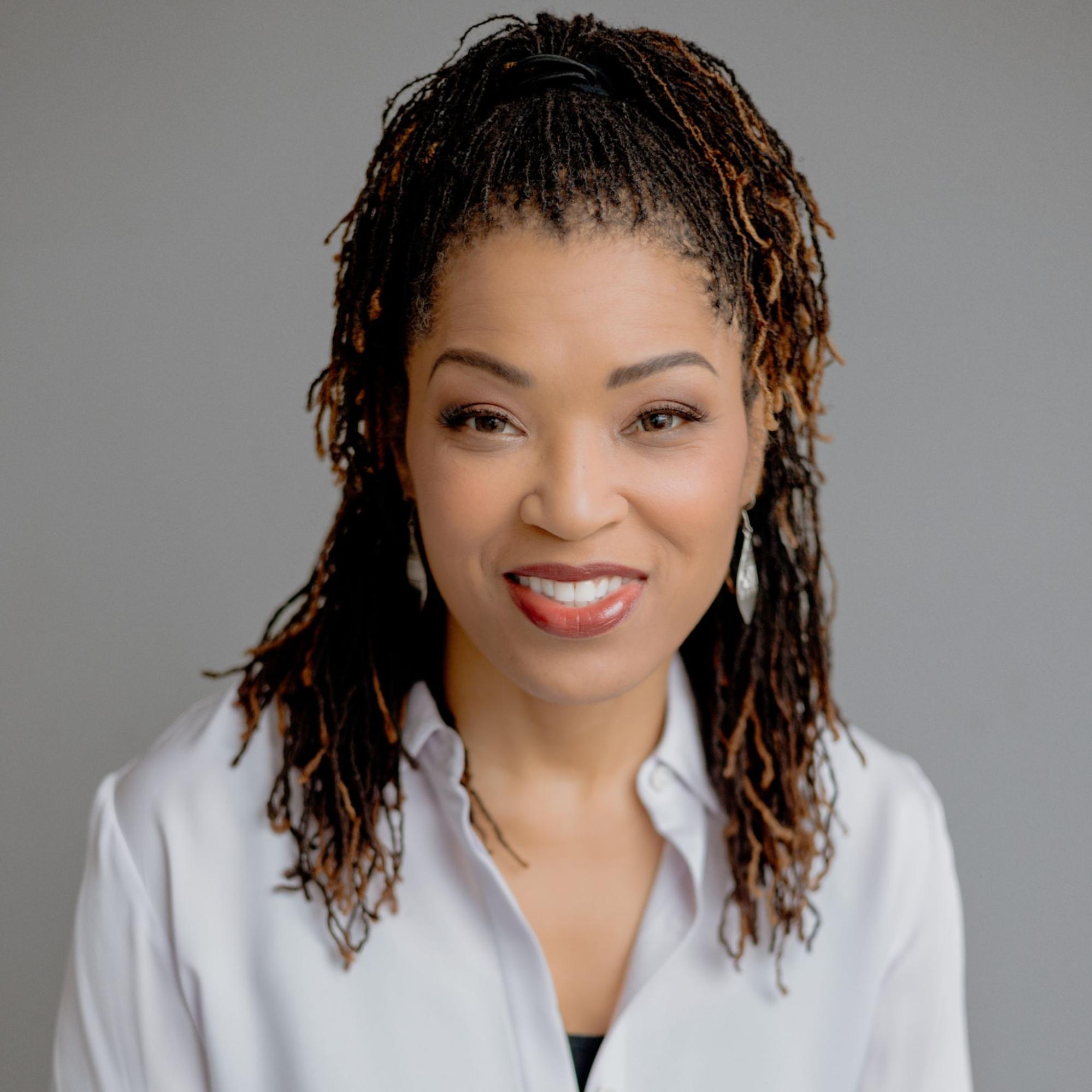 As Chief Executive Officer, Romanita oversees all activities of the M.J. Murdock Charitable Trust. An accomplished team builder, convener, and leader, Romanita draws on more than two decades of experience and service in her leadership and stewardship of the foundation’s mission.
This includes work in the nonprofit (World Vision), for profit (Microsoft), and philanthropic (Murdock Trust) sectors alongside a consistent commitment to board service (Convergence Center for Policy Resolution, Candid, Global Women, India Partners, Urban Alliance, Urban Impact, Kids in Need, and Impact Latin America) born out of a desire to engage in her highest and best use. A graduate of the University of Washington, Romanita earned her MBA from Eastern University (Philadelphia).
Related Resources:
Romanita’s Article in Christ & Cascadia
Episode Transcript
Rose: Welcome to Transforming Engagement, the podcast today we have the joy of welcoming someone whose work and writing have been deeply shaping conversations across our region. Romanita Hairston is the CEO of the MJ Murdoch Charitable Trust. And if you’ve read her recent article and reflection on the Christ and Cascadia journal on discipline and grief, we’re going to talk about that today. She’s not only leading a major philanthropic institution, she’s also inviting us into a richer imagination for how communities flourish. In the article, Romanita writes powerfully about bridge building, about the in-between spaces and about grief as a discipline, both personal and communal. It’s a vision that feels especially timely for leaders, pastors, and communities navigating loss transition and the seismic shifts that are happening in our culture. So Romanita, we’re grateful to have you today. Welcome to the podcast.
Romanita: Thank you.
Rose: To start, for our listeners who may not be familiar with your work, would you tell us a bit about the Murdoch Trust and the mission you steward, and maybe what does your day-to-day leadership look like and how you see the trust work contributing to the flourishing of communities in Cascadia and beyond?
Romanita: So the trust is 50 years old. We were founded at the untimely passing of Jack Murdoch, who was a tech entrepreneur and innovator in the Pacific Northwest. He was a co-founder of a company called Techtronics that still exists today but is not formally related to the trust. And when Jack passed, he established a trust to invest in the cultural, educational, social, and spiritual renewal of the region. And that was the trust’s purpose. And so for 50 years, we have been honoring that original donor intent, seeking to keep it evergreen. Our vision is human flourishing for the common good, and we do that by investing in both innovative and sustainable outcomes. In our areas of focus, we have five areas of focus. We serve the Pacific Northwest, Washington, Oregon, Montana, Idaho, and Alaska. Our areas of focus range from scientific research to artistic and cultural expression, but you can find a whole lot more about each of those on our website. And we do four things. We work to make effective grants to build and develop and execute effective initiatives, and we bring together convenings and support them for the purpose of learning and moving issues in the sector forward and also finding opportunities, and then we also run programs.
Rose: Thank you. What is your day-to-day leadership? What’s it like?
Romanita: Well, I think day-to-day leadership is about caring for people, process systems and operations, both internal to the organization and then externally caring for relationships, stakeholders and our core mission and values and how we show up as an institutional being in the broader landscape. I can see a whole lot more about a number of other things, but I think day-to-day leadership is really about caring for and being present to those things in a way that you make the decisions that only you can make and you empower and equip and coach others to make the decisions that only they can make.
Rose: Right. Thank you. Thank you. Well, let’s turn to the article that you wrote for Christ and Cascadia. You wrote recently on grief bridge building and you make a compelling connection between grief, geography and the ecosystems of community. So first, what prompted you to write it, write it?
Romanita: Well, when I’m asked to consider writing something, the first question you ask is, is there something that feels top of mind, material and relevant? And thinking about the landscape of the sector for this year, there’s been a number of material landscape changes and I’ve recognized that as a region, as neighborhoods, communities and as a country, we have also been experiencing what many either experience or would describe as an increasing and growing amount of polarization. And so when you take those… what would be significant landscape shifts and you take growing polarization, it just caused me to reflect on what are the disciplines that we need to be able to navigate that? And what as a leader could I talk about that might be helpful that we might not think about every day? I think there are a number of things that immediately come to mind when we’re managing significant change from enterprise risk management to other things. I think when we think about the human toll and effect of significant change, whether you think the change is good or bad, and when you think about the concerns that people have about increased polarization and all of what comes with that, it immediately leads me as a leader to go, we don’t have to just lead with our organizational tools and our good strategies. We also have to lead in the context of the human people who are involved in the process and to be present to them and the realities of what’s happening in their everyday lives as they work towards these broader visions that ultimately contribute to human flourishing for the common good.
Rose: I love this so much. The way that you’ve framed grief. You could have framed it at grief as a practice, but you framed it as a discipline and for these times that feels really, really important. You work in the nonprofit sector and your article considered specifically some of the challenges in that sector. For those who are not in the nonprofit sector, can you name some of what this sector has had to grapple with this year?
Romanita: Yeah, and I want to contextualize it as well. I think when you think about grief that often in organizational planning, we think about the course of a year and what is immediate, but I would also say that I think the feelings of grief sit in the context of what’s happened over time. And so I’m going to also talk a little bit about the broader context of the sector. When we think about what I call the quadruple pandemic, we had a health pandemic that led to an economic pandemic. We had a social justice, what some people call a reckoning, but that also in a lot of ways just pulled around different parts of the fabric. And that created its own sort of context in the midst of what was happening with the pandemic. And that sort of parlayed itself into a political moment that continues to unfold in front of us. And so on four fronts, you had social sector leaders working with some of the most vulnerable people in society through a number of different things being on the front lines of what was happening for their missions in the context of that. And as we’ve emerged from COVID into a new reality, a few things that impacted the sector coming out of that was the great resignation. There were lots of people who left the sector, meaning leaving, newer leaders, taking on a shrinking and less available workforce of leadership, meaning we lost some bench strength. And some people say you then lose, you have brain drain when you lose expertise and talent of multiple years. And so you’ve got that happening. You’ve got the residual weariness. And so there’s a number of things there. There’s compassion fatigue, which frontline workers can feel. But you also burnout, even if you’re still compassionate, you’re tired. And then across the workforce there’s been more conversation about “quiet quitting”, I’m here but I’m not fully here and I’m less productive because of these other things that are weighing. So let’s talk about those as things that came in. The sector ramped up the entire country, government, people all gave more services, bloomed and blossomed. And then we come into the start of this year is we’ve got what I would call this renegotiation of government support to the social sector. You’ve had questions of the capacity, the capability of the sector that have arisen. You’ve got a whole conversation that’s now happening. And so you add to that uncertainty, you add potentiality for critique and you add to that losses of funding across a broad range of sectors from education and scientific research to USAID, to immigration and things that are still unfolding as we work through on this process. For those people who get up every day and their core mission is I want to make the world better for somebody else, I’m willing to potentially work for less pay. I’m willing to give long hours all because I believe in our collective ability to help those who are not experiencing outcomes at the same rate and persistence as their peers. That becomes weighing, right? There is a lot to hold within that, and that becomes the human element that in as much as we do the organizational thing, we ground ourselves and the empathy around the sector.
Rose: It’s a lot, isn’t it? It’s just so much came so fast as you named starting, just if we only started with pandemic and then all the things you named leading to this particular moment. So having lived in the northwest most of your life, what do you think makes the Pacific Northwest particularly in need of or resistant to communal grief practices?
Romanita: Yeah, so I would say I think we are, I’d say there’s a couple of things that happen that are at play in our ecosystem when you think about it. And we have a unique perspective as a regional funder because when we look at the region, Washington, Oregon, Montana, Alaska and Idaho, we see really a purple region. When you think about one of the main things that people tend to think we’re polarized around is the political divisions that we have. And those political divisions are playing themselves out in terms of policies and decisions. And if you were to step back from whether people are excited about those or frustrated about those, and I don’t say that lightly to say that those things, how we feel about them and whether decisions are being made, are helpful or harmful. I say that to add another context to this rich environment for an opportunity to have heartfelt discussion, what you see is a landscape that’s rich with diversity of thought and identity. You see communities that are deeply steeped in care for one another in all kinds of different compositions across the region. You see an opportunity for us to demonstrate something that says we can come together because we care about one another. We can bring our differences of opinions to a place to solve tough challenges. You see an opportunity rich environment that affords us the opportunity to do things differently and to do things on behalf of those who are most vulnerable in our communities. You see a landscape and tradition of either neighbor helping neighbor, large institutional giving, individual compassion. You have all the ingredients for doing something that people might not think is possible depending on how they look at the current landscape and environment that we live in. And I think that ultimately comes down to the vision of leaders. And I think that in addition to vision, it also comes down to our ability to accept the things that don’t exist and to grieve the things that we believe are lost in order to build from that a collective new vision of how we move forward. And I think grief is essential to building new vision in the midst of complex and consistent change.
Rose: You sit in an interesting seat to look over the Pacific Northwest with the work that you are doing because I think sometimes when we don’t have that type of seat to see the big vision, like when you said it’s purple, so many people are in their own individual community bubbles that I think we think it’s so polarized, there’s no way to talk to the person that I disagree with. So I appreciate where you sit and how you see it and the idea of being able to process loss together. That’s why I think your article was so important for readers. Maybe we could take just a breath out of our bubble and read through that lens of what you just described. What do you think is one thing to honestly grieve with one another? How do we practice this discipline of grief not only in our nonprofit sectors, but also in the church? Our audience probably has a lot of church ministry leaders and pastors, so how would you talk to them about this?
Romanita: Yeah, I’ll maybe talk about it… I’ll talk about it in an organizational context, in a faith context, and maybe I’ll start with the faith context and then extrapolate to what might be more of an organizational context. I think the book of Lamentations invites us to ask the question how. I think a lot of times for those of us who are living our everyday lives, we don’t make the decisions that lead us to places sometimes where we’re grieving. Sometimes we are the agents of actions that lead us to places to grief, but sometimes grief is brought upon us. There are losses that we didn’t control the decisions or had partial influence to as they come to us. And one of the things I love about the book of Lamentations, and I am not a theologian, I am just theological. But I remember a long time ago doing some study on the book of Lamentations and how really the title of it in and of itself speaks to how, and there are these four narratives or perspectives in the book of Lamentations, which is about lament as a way to grieve it is fully throwing yourself into what has been lost. And what I love about the book from a theological and also a very practical perspective is the writer takes the four narratives and seems to suggest to us that lament is made whole when it is full of every perspective. We often in the church come to the strong perspective, great is thy faithfulness as the strong man’s or strong woman’s perspective when you think about that particular voice in Lamentations. But a part of the beauty of lament is its collective nature, how it creates room for all the perspectives of loss. And sometimes those perspectives are uncomfortable. And so I think in the context of Christian community and church life, a part of what we offer to people when they get to come together collectively is the space to bring their perspective of loss to freely and in an unfettered way. Whether it feels comfortable or what someone sees is nice to see. When you think about the book of Lamentations and what the narratives are seeing, it’s some uncomfortable things, but somehow they’re brought together these cries and then they’re laid down in the context of community. And this strong voice emerges in the middle of that context to bring clarity and perspective and a way of seeing. And I think that that’s a part of what we have to do in faith communities is create those spaces in addition to teaching and preaching that happens on Sunday. And Bible studies and community building are those communities forming around these moments of loss, especially when we can feel that. And here’s a great example, I think churches are hurting from being split by politics being split by issues today around lifestyle and other things. The church is hurting. And I think there is this way that leaders are stepping up. I have a deep heart for pastors who have to navigate these things, who are stepping up to try to talk about those things. I think also just creating places for people to commune around the challenge of what it is, the loss of what was and needing to become something new. There are things we leave behind that we need to leave behind, and there are things that we leave behind that we love. And I don’t know that we have as many places in the church to come together and lament, but there are certainly things that are lamentable. So that’s my context about churches and places of faith. And so I’ll see if you have any questions about that before I talk about organizational practice.
Rose: I do because If I’m a pastor and I just heard that I’m thinking, how do I do that? That would create a safe enough context for people to come that have different ways that they’re grieving the loss. Like maybe one loss that I’m grieving I think is ridiculous that the other person isn’t, you know what I’m saying? So how would you create a safe enough space in a church community? If you’re talking to the ministers, what would you do?
Romanita: Yeah, so I mean, I’ll tell you the things that I have seen from personal practice work, those things that I have seen is creating that safe environment, like bringing people into a place where the ground rules for how we engage are clear, where the goal is not to respond, where the goal is to actually as some people say hold and create space for what is uncomfortable and hard to see to be seen. I’ve seen liturgy be a great way to cement that. I think it takes leadership from the front to say what the space is and what the space is, not. To lay the ground rules for engagement. I’ve seen particip roles where people call out and say a name where people write and then recite and where the collective call to the community is to sit and as each person names it, to lift it to God with liturgy. And to say things like, one example is someone lifting something that’s really difficult and someone saying and let God be the one who hears and sees and judges and just letting people lift those things. And then having a communal sort of affirmation of, and we commit to hold you in community in your grief. It’s those kinds of things and processes that are meaningful to the community in this particular case, it’s a process that’s meaningful to that community. I think leaders know their communities and know the things that help to shape and nurture safe space, but it is about those facilitated processes of coming together to tell the stories and say the things in places that are nonjudgmental where people agree to be a part of it because it’s about our commitment to each other, not our causes. And I think that becomes one of the most important ground rules. This is about our commitment to each other, not our causes. There are places and spaces for that, right in church polity and church life, but this is a space where we sit together and hold our grief and come around our common sense of loss. And it is not without risk. It is not without jeopardy, which is why it takes sort of in the Joshua command to be courageous and to trust the Lord and the Holy Spirit to go with you. It is spirit infused work. It is spirit led work. I mean it requires the spirit to breathe on it. So those are thoughts about church spaces and how that work happens.
Rose: That’s really helpful. And before we move on to the nonprofit sector, I just want to ask you one question about, because the Lamentations study is so important in the times we’re living in right now. And so one of the questions is when we get to in the center of Lamentations where the quote is “great is thy faithfulness”, how do we avoid treating this as spiritual bypassing while still claiming hope?
Romanita: I think the placement in the middle actually says how we do it. We go through and not around and not over. I think those with strong voices have to listen long enough for there to be the place for hope to emerge. I don’t think hope is cast upon people. I think hope is an invitation. And I think when you read invitations, what you feel at the middle is this is an invitation to something, right? It’s not a demand or a command for something. And I think taking it out of the context of a book in scripture, I think in active leadership hope is a constant invitation to a new way of seeing. And I think those leaders who have that strong person capacity have to show up with that hope as an invitation and hope in time having seen together and held the hard things. And I think until we hold the hard things, it’s hard to bring the hope. And sometimes we don’t hold enough time to hold and sit with the hard things to place them before a God we believe is loving and cares and meets us all exactly where we are. I think that’s a part of leadership and lament is that it’s reminding people that we can’t hold people’s hard loss, right? I am not your salvation. We look to something larger than ourselves as the place to hold this. And what we can collectively do is sort of hold up each other’s arms as we bring these things to God and trusting the Holy Spirit to help us sort it out, but remembering we’re going to never lose sight of our love and care for one another even in hard things.
Rose: Yeah. So good. So good. Okay, let’s hear in the nonprofit sector, what do you say?
Romanita: Yeah, so in organizational process, in some ways I actually think organizational processes are potentially, I don’t think they’re easier, but they’re different. So I think what is difficult or hard about them is different. An organizational processes, the ability to name hard things is really more a function of the culture that you create. And I think when we create a culture that is built on transparency and the ability to share, then it becomes about what we’re willing to name in ourselves and in the world around us and the space that we create for dialogue and discussion. And then it’s about acknowledging the challenges even when we don’t agree. And I think that that’s probably one of the difficult things that I observe and hear from organizational leaders is with this sense of growing polarization, it’s almost difficult for them to be empathetic or present with others who have a differing opinion because that somehow suggests allegiance to ideas. And so this question of allegiance to ideas and worldview has become more important to our allegiance to each other and to community building and to solution finding. Sort of like the first question is, whose side are you on? Which actually has a real biblical narrative. And I think we then have to go, we want to be on the side of our shared values, the side of people who are vulnerable, the side of our shared prospering. And so for organizations like ours where philanthropy means the love of humanity, it offers for us the opportunity in this space to say the hard things we will name is being together in our differences. Having what I call strong conviction or sort of ontological conviction about truth and also humility that we are not the truth bearers, that none of us are gods and that we are all fallible. And I think in institutions where we recognize our fallibility that we are not completely, totally or wholly accurate about anything and that some places we may have better ideas and other places we may not, it causes us to then come to conversations able to fully be ourselves and also expect to be inspired, transformed, or changed by other people’s ideas. And so I think it’s about organizational culture. And then when difficult things happen, we then are hopefully able to sit within our organizations with empathy, but even more so to radiate that out in a way that is about our love for others. And right now, I would say our heart really aches for places that many people find themselves in recognizing that not everybody’s in the same place, but through our listening sessions and the places we’ve been, we’ve sat with leaders who are facing really deep challenges. And we hold that not just close to our organizational strategy, but close to our organizational heart, right? Respecting that these are real people with deep values and honest intentions and noble character who are facing really difficult, difficult season in difficult challenges right now.
Rose: Yeah, I really like about when you said our allegiance to ideas and what did you say versus to each other?
Romanita: Yeah, commitment to causes versus commitment to community. And those things don’t have to be opposed. And I think we have to find our way back to a balance to recognizing we can have the causes and things we believe in, but we can also hold those in communities that are safe, right?
Rose: Yeah. Because when you said instead of whose sight are you on, it’s like my allegiance isn’t to this person in the organization. My allegiance is to the mission, the values. I really love that perspective. And I think that gets lost because there’s so much conflict happening in organizations right now with the polarization, whether it’s politically, theologically, or culturally, even. So I think that’s a piece of gold for me to know whose side am I on? It’s not about being on a person’s side, but to the org. So well, maybe as we come to the end, a couple of things. If grief strengthens our ability to bridge divides, does joy do the same?
Romanita: I completely… So in a different thing that I wrote recently, I talked about grief and gratitude. And so I see them both as disciplines and I think gratitude in many ways. I don’t want to say this, it’s a fact. I want to say it more like it’s an idea. I think gratitude is a prerequisite to joy. And so to your question, I think, and maybe I just alliteration and grief and gratitude also, they’re like G squared. And so I also try to have a daily gratitude practice. I think that it can be very easy when things are difficult to end up in a polar extreme. The world is either our proximity to pain can lead us to believe the world is falling apart or our proximity to power. And I mean that in the sense of resilience or protection from whatever is happening, or our sense of what we think is right is happening. We’re in the power position. What’s happening feels good to us. It can be pretty easy to just be in a space of unparalleled joy. And I think that balancing grief and gratitude, again, grief opens us up not just to our own narrative, but to the narrative of others and what is happening around us. And it tempers what might be our joy for things if we recognize others who we care deeply about, are not faring as well in a place where we might be faring well. And I think gratitude allows us to see what’s going well. And it gives us a great opportunity to then take what is grieving and to imagine a better way, meaning we don’t get stuck in the point of just looking at what’s not working. We actually become mobilized to leverage what is strong, to find a new way forward. And if I were to think about that in scriptural context, that is the beauty of the nature of the strong person is reminding even in the most difficult things, there is a faithful right God who shows up to bring us to a new place that leadership emerges and that this thing that is horrible that we would wish that no one would see, we can emerge from it. We have capacity, we have a spirit, we have the love of God to help us move forward. In the context of organizational life, that thing that brings rebirth is belief in a vision and mission and the people in community around you that these problems are not so intractable that we cannot work on them together and move forward. And that mission and that vision become a rallying cry that we once believed something was possible. Do we yet still believe it’s possible? And can we leverage what we have right now to continue to move that vision forward on behalf of those we’re called to serve?
Rose: Very important. In some of all of that. Another thing I think about in the scripture, how many times we’re told to remember the faithfulness of God? Remember even in the midst of the valley of the shadow of death, I can remember who God is. And that doesn’t feel like a platitude to some people. It might when they’re in the midst of it, but mostly we could embrace it just as a gift of faith in some ways when we’re in that place. So you talk a lot about cultivating bridge building leaders. How do practices of lament and gratitude make us better leaders? I think you’ve just really said that, but I want you just to say it one more time as we come to a close of this.
Romanita: Yeah. Well, I think one, in a really practical way, leaders who focus on what’s working well tend to then find better solutions. And I think in the practice of grief, when we think about it from the context of lament in those perspectives, we all know that diverse teams and diverse perspectives drive better outcomes. And so I think these practices not only make us stronger as individuals, they make us stronger as collective teams. And fundamentally, I think they cause us to lean towards one another as opposed to away from one another, right? When I believe your perspective of loss is valuable to mine and our ability to collectively grieve together, right? I’m leaning towards you. I’m not afraid of your grief, right? I’m not afraid of your loss. I’m actually recognizing that our collective ability to hold one another makes us stronger, gives us the ability to see a new way forward. And when we practice gratitude, that’s not just gratitude for the things that happen, it’s gratitude for each other. It allows us to continually challenge our perspective, not just of ourselves or what’s happening in the world, but of the people around us. And to see health and opportunity where we might not have otherwise seen it. And this is the last thing I will say, is there’s a statistic about how many negative messages we hear relative to the positive ones. The negative ones highly outweigh the positive ones. And you theoretically, in order to really have something be deposited into you, it’s a three to one ratio of what you need positive to negative. And so as I understand it, which means there’s lots of opportunity for gratitude to reform us and to shape who we are and how we choose to inhabit the world and engage with those around us.
Rose: Well, Romanita, thank you. Thank you so much for your wisdom for the way that you wrote in this article. A discipline of grief just feels so important in the times that we’re living. So thank you so very much.
Romanita: Thank you for your time and for the opportunity to be on the podcast. It’s been delightful to talk with you.