
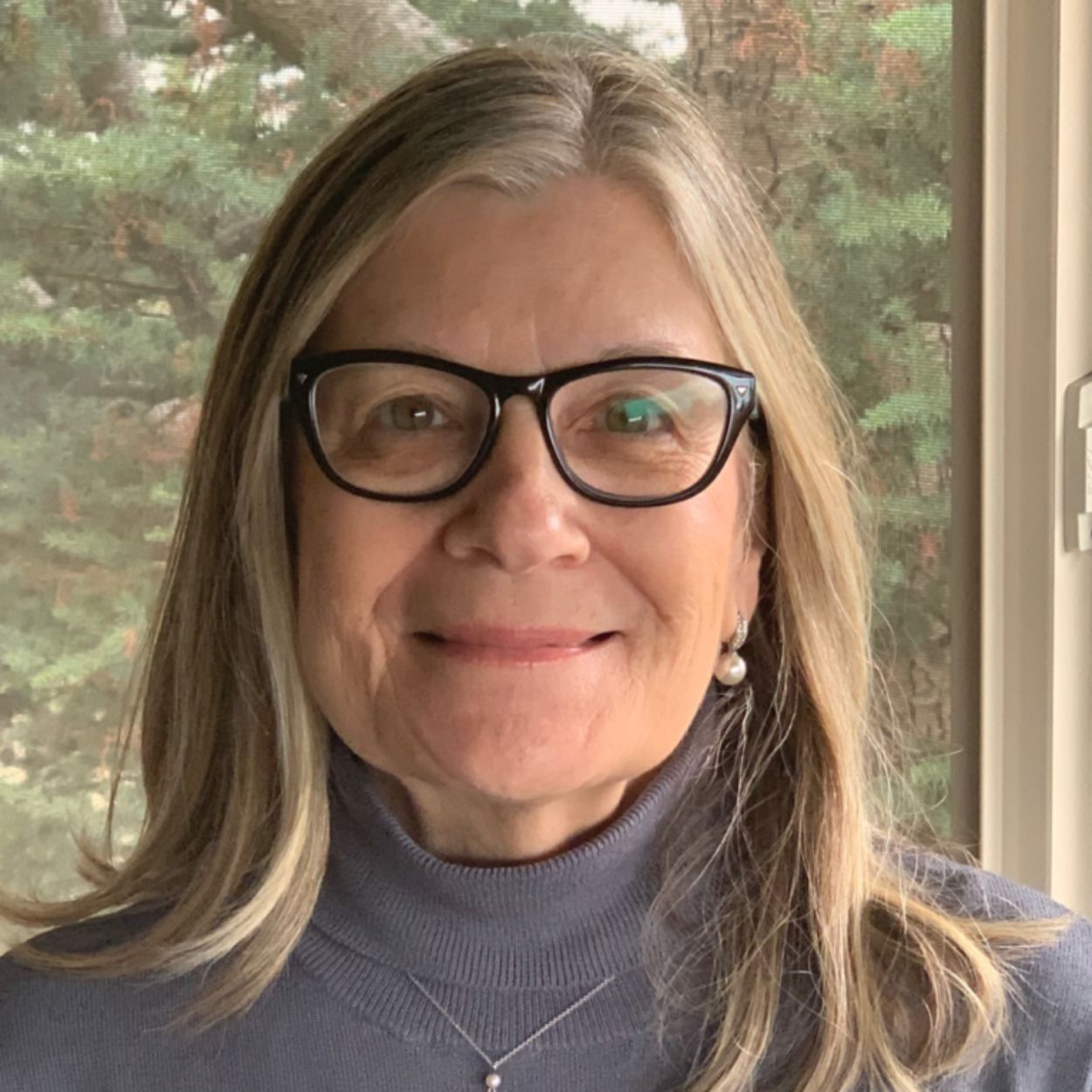
Instructor

Dr. Rose Madrid Swetman

Rose is the Executive Director for the Center for Transforming Engagement overseeing resilience programs, bringing a lifetime of ministry experience as co-founder of the Practicing Church in Shoreline, WA, former Regional Leader of Northwest Vineyard USA, and founder of Canopy Scholars; she continues to teach and preach, champions women in ministry, and draws her passion for resilience from her own health journey, holding a DMin from Bakke Graduate University focused on transformational leadership for the global city. She and her husband, Rich, have a blended family of eight children and more than twenty-five grandchildren.

Leadership Skills for a Divided Congregation

Lead through conflict without avoiding difference or letting it tear your community apart.

Online

Start Date: May 5, 2027

End Date: June 9, 2027

Time: 12PM-2PM (PT)

All Levels

Day of Week: Wednesday

Capacity: 10 Seats

Topic: Leadership Development

6 Sessions
Early Bird Member Price: $331.29

Early Bird Non-Member Price: $368.10

Number of CEUs Available: 12

Online
All Levels

6 Sessions

Topic: Leadership Development

Start Date: May 5, 2027

End Date: June 9, 2027

Time: 12PM-2PM (PT)

Day of Week: Wednesday

Capacity: 10 Seats

Early Bird Member Price: $331.29

Early Bird Non-Member Price: $368.10

Number of CEUs Available: 12

Leadership Skills for a Divided Congregation

Lead through conflict without avoiding difference or letting it tear your community apart.

You can feel it when a congregation is divided.

People stop saying what they really think. Conversations become more guarded. Certain topics feel too risky to name. Small disagreements carry the weight of much larger tensions.

And the leader is often expected to somehow hold it all together.

Leadership Skills for a Divided Congregation is a six-session online course for pastors and ministry leaders who want practical tools for understanding division, listening across differences, facilitating difficult conversations, and leading communities toward greater honesty, connection, and reconciliation.

Division Is Not Always Loud

Conflict in a congregation does not always look like an argument.

It may show up as factions, avoidance, unspoken resentment, competing priorities, theological disagreement, political tension, or people quietly withdrawing from one another.

The challenge for leaders is not simply getting everyone to agree.

It is learning how to recognize what is happening beneath the surface and create conditions where difficult differences can be engaged without immediately becoming destructive.

This course helps leaders develop the awareness and practices needed to do that work.

What You Will Explore

Understanding Division in the Church

Examine some of the forces that can fracture congregations, including political polarization, theological differences, cultural narratives, competing priorities, and unspoken tensions.

Learn to identify where division is already affecting relationships, trust, and your congregation’s ability to pursue its shared mission.

The Inner Life of the Leader

Conflict affects leaders too.

Explore self-differentiation, emotional intelligence, spiritual maturity, and the patterns that emerge in you when tension rises.

Learn to remain connected to people without becoming consumed by the anxiety around you.

Listening Across Differences

Listening becomes harder when we strongly disagree.

Practice listening not to persuade, correct, or prepare a response, but to understand.

Explore practical skills for pastoral listening, including asking open questions, reflecting what you hear, resisting the urge to fix, and approaching difference with curiosity.

Facilitating Difficult Conversations

Some conversations cannot be avoided forever.

Learn how to create conditions for honest dialogue, establish clear expectations, hold tension without rushing toward resolution, and use practical facilitation tools for challenging conversations.

You will also consider how your own anxiety can affect the room and what helps you remain grounded while facilitating.

Leading Toward Reconciliation

Reconciliation is not the same as restoring everything to the way it was.

Explore practices of truth-telling, forgiveness, confession, lament, and pastoral care while considering what genuine repair may require.

Identify places in your own community where a first step toward healing may be possible.

Prophetic Leadership and Hopeful Imagination

Division can make it difficult to imagine anything beyond the current conflict.

Explore how leaders can help communities move toward a more hopeful future rooted in truth, justice, mercy, reconciliation, and shared purpose.

This Course Is for You If…

Your congregation is struggling with political, theological, cultural, or generational differences.

You are avoiding certain conversations because you are not sure how to lead them well.

People in your community seem to be talking past one another rather than with one another.

You feel pressure to take sides, keep everyone happy, or make the conflict disappear.

You want to become less reactive when tensions rise.

Or you want practical tools for helping people remain in relationship even when agreement is not possible.

What You Can Take Back Into Your Congregation

By the end of the course, you will be better equipped to:

  • Recognize explicit and hidden sources of division
  • Understand how your own responses affect conflict
  • Listen more effectively across political, theological, and cultural differences
  • Facilitate difficult conversations with greater confidence
  • Create space for honesty without requiring immediate agreement
  • Identify opportunities for truth-telling, reconciliation, and repair
  • Lead without rushing to smooth over discomfort
  • Help your community imagine a way forward together

You Do Not Have to Eliminate Difference to Lead Well

A healthy congregation is not one where everyone thinks the same way.

The work of leadership is not to erase difference or force consensus.

It is to help people remain honest, connected, and accountable to one another when disagreement becomes difficult.

This course gives you practical tools for doing that work with greater courage, steadiness, and care.

Enroll in the Class

Instructor

Dr. Rose Madrid Swetman

Rose is the Executive Director for the Center for Transforming Engagement overseeing resilience programs, bringing a lifetime of ministry experience as co-founder of the Practicing Church in Shoreline, WA, former Regional Leader of Northwest Vineyard USA, and founder of Canopy Scholars; she continues to teach and preach, champions women in ministry, and draws her passion for resilience from her own health journey, holding a DMin from Bakke Graduate University focused on transformational leadership for the global city. She and her husband, Rich, have a blended family of eight children and more than twenty-five grandchildren.

Why should I become a member?

Members get to register for classes early – a full week before they open to the general public! Plus, members receive a 10% discount on all events and classes and access to value-add content in their inboxes throughout the year. To become a member, you can sign up here, or purchase a membership when you buy your class.

What kind of help in payment is available?

We offer discounts of up to 50% to clergy, staff, and lay ministry leaders of our official partners, which includes the Olympia Presbytery, the Northwest Coast Presbytery, and the Episcopal Diocese of Olympia. Partnerships have no financial cost, and are available with (a) regional or national denominations), (b) multi-site churches, or ( c) large nonprofit organizations. If you would like to encourage your organization to become a partner, please email your regional leader to let them know! You can even introduce them to us by cc’ing transforming@theseattleschool.edu, and we’ll put them in touch with the right person for next steps.

Early bird discounts are available during the first week of registration.

Becoming a member costs offers 10% on all classes and events for a full year. Often, just one class is enough to make the membership cost worth it.

If you pastor with a denomination, you may have resources for professional development. Check with your regional supervisor for more information on funds available.

What are the community guidelines?

Please see the full community guidelines on this page. If an instance of community guidelines are violated and cannot be resolved within the class, participants may let us know by emailing us transforming@theseattleschool.edu and we will direct you to The Seattle School’s incident report form.

What happens if my class is cancelled?

If the Center cancels an offering for any reason, all participants will receive a full refund of registration fees.

If a program is rescheduled, participants may choose to transfer their registration to the new date or receive a full refund.

How do I request a refund?

Refunds are available according to the following schedule:

  • 60+ days before the program start date: 75% refund
  • 30–59 days before the program start date: 50% refund
  • Less than 30 days before the program start date: no refund

If you need to cancel your registration, please email transforming@theseattleschool.edu and include your name and the course title.

If the Center cancels a program, all participants will receive a full refund of registration fees. If a program is rescheduled, participants may choose to transfer their registration to the new date or receive a full refund.

How do I contact technical support?

Technology should not be the hardest part of your learning experience. If you encounter errors in the catalog, problems with payment, or difficulty accessing course materials, please let us know. You can find the technical support form here. We try to respond within 48 hours (business days only).

Full attendance and participation during all sessions are expected to complete the program.
Terms / Conditions. By registering for a Resilience or Leaders Circle, you agree to the following (scroll down and click agree)
Please consider the schedule closely to ensure you will be able to participate in the virtual meetings, and block off your calendar to ensure your attendance. Should you have an emergency (illness, situations out of your control) that will impact your participation please email transforming@theseattleschool.edu
Time commitment:
Two hours one day per month for 8 months, dates to be determined by majority of registrants' availability and adjusted as needed during the first group meeting.
Your feedback is immensely valuable!
As an essential component of your participation in this program, we ask that you provide us with your honest, candid, and timely feedback in program surveys and conversations, and consider providing reviews or testimonials of the program for promotional use.
Code of Conduct:
The Center for Transforming Engagement strives for intentionality in the ways we relate to one another - how we as a team relate to each other, how we relate to participants, and how we hope participants will relate to us and one another. To that end, we hold cultural norms about the ways we interact with one another. Your participation in this program is contingent on your agreement to abide by these cultural norms. i. For growth to happen, we all need to be able to share about the deeper challenges we face. To provide that atmosphere of openness and support, you commit to not sharing personal information that is shared in program meetings. ii. In our interactions with each other and our communities, we practice the humility of not-knowing that is required to listen and discover. iii. Be aware of different cultural and characterological ways of communicating, and invite others’ voices. Respect theological differences: the river of Christian orthodoxy is wide, and while the streams of that river are distinct, they are not inherently better or worse. Even if you can’t respect the belief, treat the person with respect. iiii. We value both thoughts and feelings as valuable pieces of information that inform one another, and inform our learning and discerning together. iv. Be in the here and now (not mentally somewhere or some time else), with the people who are sharing their time and stories with you. Eliminate any distractions possible.
Fair Use Policy
All program content, recordings, and materials are the intellectual property of The Seattle School and may not be presented, distributed, or replicated. The Seattle School retains the copyright for all recorded content. Some print materials (PDFs, worksheets, journal prompts, etc.) will be licensed under Creative Commons: Attribution NonCommercial ShareAlike. Those materials will be available for download on our website, and may be used as long as the following conditions are met: (1) attribute to the Center for Transforming Engagement even if remixed/modified; (2) do not use for commercial (paid) purposes; and (3) anything you make that remixes or builds upon this material, you must also distribute under Creative Commons. More information on this license is available at creativecommons.org/licenses/by-nc-sa/3.0/
(scroll down and click agree) Full attendance and participation during all sessions are expected to complete the program. Please consider the schedule closely to ensure you will be able to participate in the virtual meetings, and block off your calendar to ensure your attendance. Should you have an emergency (illness, situations out of your control) that will impact your participation please email transforming@theseattleschool.edu Time commitment: Two hours one day per month for 8 months, dates to be determined by majority of registrants' availability and adjusted as needed during the first group meeting. Your feedback is immensely valuable! As an essential component of your participation in this program, we ask that you provide us with your honest, candid, and timely feedback in program surveys and conversations, and consider providing reviews or testimonials of the program for promotional use. 2. Code of Conduct The Center for Transforming Engagement strives for intentionality in the ways we relate to one another - how we as a team relate to each other, how we relate to participants, and how we hope participants will relate to us and one another. To that end, we hold cultural norms about the ways we interact with one another. Your participation in this program is contingent on your agreement to abide by these cultural norms. Confidentiality. For growth to happen, we all need to be able to share about the deeper challenges we face. To provide that atmosphere of openness and support, you commit to not sharing personal information that is shared in program meetings. Curiosity. In our interactions with each other and our communities, we practice the humility of not-knowing that is required to listen and discover. Respect differences. Be aware of different cultural and characterological ways of communicating, and invite others’ voices. Respect theological differences: the river of Christian orthodoxy is wide, and while the streams of that river are distinct, they are not inherently better or worse. Even if you can’t respect the belief, treat the person with respect. You are invited to be a whole person, with both thoughts and feelings. We value both thoughts and feelings as valuable pieces of information that inform one another, and inform our learning and discerning together. Presence. Be in the here and now (not mentally somewhere or some time else), with the people who are sharing their time and stories with you. Eliminate any distractions possible. 3. Fair Use Policy All program content, recordings, and materials are the intellectual property of The Seattle School and may not be presented, distributed, or replicated. The Seattle School retains the copyright for all recorded content. Some print materials (PDFs, worksheets, journal prompts, etc.) will be licensed under Creative Commons: Attribution NonCommercial ShareAlike. Those materials will be available for download on our website, and may be used as long as the following conditions are met: (1) attribute to the Center for Transforming Engagement even if remixed/modified; (2) do not use for commercial (paid) purposes; and (3) anything you make that remixes or builds upon this material, you must also distribute under Creative Commons. More information on this license is available at creativecommons.org/licenses/by-nc-sa/3.0/
Lina Thompson is the lead Pastor at Lake Burien Presbyterian Church. Her primary vocation and call is the formation of leaders who love and serve their city and seek its peace.
Silas Sham is the Lead Pastor of Bethany Community Church Northeast in Seattle and holds a Doctor of Ministry in Semiotics, Church, and Culture from Portland Seminary. His research explores how food can form and reflect theological imagination. He created Theology on a Plate, a gamified discipleship experience that brings people around the table to taste, tell, and practice the story of God. His work has been published through the Society of Biblical Literature and in various theological and ministry journals, and he believes the best theology is lived, savored, and shared in community to nourish all of creation.
Rev. Danielle Merseles is the current Associate Pastor of Youth and Young Adults at Bethany Presbyterian Church, Seattle. After an unexpected yes to volunteering in youth ministry back in 2011, Danielle eventually enrolled in seminary at Seattle Pacific, did a unit of chaplaincy at Harborview, and became ordained in the PC(USA). She loves regularly teaching and learning from people younger than her and has been called to Bethany for nearly 10 years now. She is a New Jersey native, Tulane University School of Architecture graduate, hobby potter, loves being auntie/godmother to her friends small people, and has called Seattle home since 2007.
Jessica became disabled as a young adult and has worked for accessibility and inclusion specifically in third places for over 20 years. Coming to the Episcopal Church after experiencing religious trauma from “faith healing,” Jessica feels called to break down barriers, both physical as well as spiritual by addressing the harmful theologies and behaviors that have shown disabled people that “we are not welcome as the Beloved People God created us to be.” She is blogger, speaker, and consultant for Bridge Disability Ministries.
The Rev. Dr. Leah D. Schade is the Associate Professor of Preaching and Worship at Lexington Theological Seminary in Lexington, Kentucky, and served as the President of the Academy of Homiletics in 2024. An ordained Lutheran minister (ELCA) for nearly twenty-five years, Leah earned both her MDiv and PhD degrees from the Lutheran Theological Seminary at Philadelphia (now United Lutheran Seminary). She has pastored congregations in suburban, urban, and rural contexts. She is the author of seven books, including Preaching and Social Issues: Tools and Tactics for Empowering Your Prophetic Voice (Rowman & Littlefield, 2025), and Preaching in the Purple Zone: Ministry in the Red-Blue Divide (Rowman & Littlefield, 2019).
The Rev. Natalie "Nat" Johnson serves as Priest in Charge at St Peter's, a diverse and multi-ethnic Episcopal parish in Seattle WA. Over the last five years, Rev. Nat has served on the Diocese of Olympia's Commission on Ministry, walking with individuals sensing a call to ordained ministry. They also currently serve as Affiliated Faculty at Church Divinity School of the Pacific where they teach Liturgical Theology to seminarians preparing for the priesthood in the Episcopal Church.
Rev. Bruce Reyes-Chow is a 3rd Generation Filipino/Chinese American and an active speaker, writer, and coachsultant. His writing, teaching, and speaking have taken him to Australia, The Philippines, Japan, Taiwan, Canada, and across the United States as he addresses topics of faith, leadership, activism, culture, race, and technology. Author of six books, most recently, In Defense of Kindness: Why It Matters, How It Changes Our Lives, and How It Can Save the World (Chalice Press, 2021) Everything Good about God is True: Choosing Faith (Broadleaf Books, 2024). Bruce also has a broad online video and audio presence but writes and podcasts through his Newsletter & Podcast, The Amalgamation. Bruce has been an ordained minister in the Presbyterian Church (USA) since 1995 and has pastored seven congregations throughout California. In 2008, he was elected Moderator of the Presbyterian Church USA, the youngest and first Asian American to hold the denomination’s highest elected office. He currently sits on the Board of Directors of Interfaith Movement for Human Integrity, works with Sabeel Ecumenical Liberation Theology Center to lead delegations to Palestine, is a Senior Consultant and Coach with Convergence, is a Gallup-Certified CliftonStrengths Coach, and is the Church Relations and Development Officer at Zephyr Point Conference Center. Bruce and his wife, Robin, have three adult children, two senior pups, too many houseplants, and a thriving empty-nester life in San Jose, CA.
Sign up for free access to the full video series and explore how Christian leaders can respond with clarity, courage, and hope.
Begin the series: Understanding Christian Nationalism and the Crisis of the State
Share Your info

This field is for validation purposes and should be left unchanged.
Name(Required)